
ASD & VSD Closure Treatment in India
Pediatric & Adult Congenital Heart Care, Catheter-Based Closure & Advanced Structural Cardiology
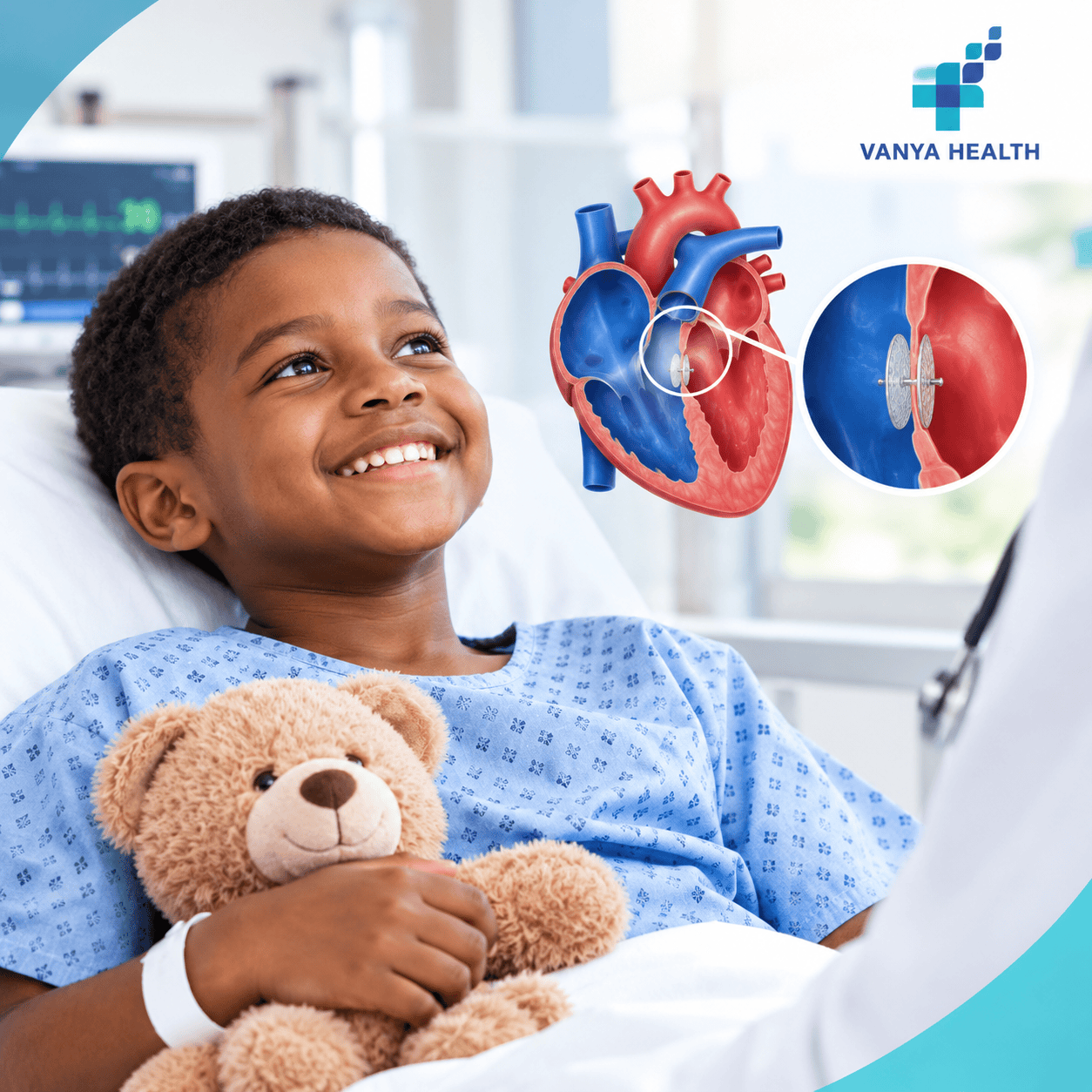
At Vanya Health, we connect domestic and international patients with India’s leading pediatric cardiologists, adult congenital heart disease specialists, interventional cardiologists, cardiothoracic surgeons, and advanced cardiac centers. From minimally invasive device closure procedures to complex congenital heart surgery, we facilitate access to advanced ASD and VSD closure treatment in India, helping patients receive personalized care based on the type of defect, heart anatomy, age, symptoms, and overall health condition.
-
Comprehensive Congenital Heart Disease Programs designed for children, adolescents, and adults with atrial septal defects (ASD), ventricular septal defects (VSD), and related structural heart conditions.
-
JCI & NABH Accredited Partner Hospitals equipped with advanced cardiac catheterization laboratories, pediatric cardiac ICUs, congenital heart surgery units, and specialized imaging technologies.
-
Complete Medical Tourism Concierge: Assistance with medical visa documentation and application support, multilingual interpreters, accommodation coordination, and airport transfers. While we facilitate the visa process, visa approvals and processing timelines remain solely at the discretion of the relevant authorities.
Understanding
ASD & VSD
Atrial Septal Defect (ASD) and Ventricular Septal Defect (VSD) are among the most common congenital heart defects. These conditions occur when an opening remains in the wall (septum) that separates the chambers of the heart.
An Atrial Septal Defect (ASD) is an opening between the two upper chambers of the heart (atria), while a Ventricular Septal Defect (VSD) is an opening between the two lower chambers (ventricles).
Small defects may cause few or no symptoms and sometimes close naturally during childhood. Larger defects can affect blood circulation, increase pressure within the heart and lungs, and potentially lead to long-term complications if left untreated.
Modern treatment options include minimally invasive catheter-based device closure and surgical repair, allowing many patients to achieve excellent long-term outcomes and improved quality of life.
Symptoms & Warning Signs
Symptoms vary depending on the size and location of the defect, age of the patient, and impact on heart function.
-
Shortness of breath during activity.
-
Easy fatigue.
-
Reduced exercise tolerance.
-
Frequent respiratory infections.
-
Heart palpitations.
-
Irregular heart rhythms.
-
Swelling of the legs in advanced cases.
-
Rapid breathing.
-
Feeding difficulties in infants.
-
Poor weight gain.
-
Frequent chest infections.
-
Excessive sweating during feeding
-
Fatigue
-
Shortness of breath.
-
Heart murmur detected during examination.
Some patients, especially those with smaller defects, may remain symptom-free for many years.
Advanced Diagnosis & Precision Cardiac Evaluation in India
Accurate diagnosis is essential for determining whether observation, catheter-based closure, or surgery is the most appropriate treatment approach.
-
Clinical Cardiology Assessment
-
Electrocardiogram (ECG/EKG)
-
Chest X-Ray
-
2D Echocardiography
-
Color Doppler Echocardiography
-
Transesophageal Echocardiography (TEE)
-
3D Echocardiography
-
Cardiac CT Scan
-
Cardiac MRI
-
Cardiac Catheterization when clinically indicated
-
Pulmonary Pressure Assessment
-
Comprehensive Cardiac Function Evaluation
These investigations help determine defect size, location, blood flow patterns, heart chamber enlargement, pulmonary pressures, and treatment suitability.
Types of Congenital Heart Defects We Help Patients Access Treatment For
Atrial Septal Defect (ASD)
An ASD allows oxygen-rich blood from the left atrium to mix with oxygen-poor blood in the right atrium.
Common ASD types include:
• Secundum ASD
• Primum ASD
• Sinus Venosus ASD
• Coronary Sinus ASD
Ventricular Septal Defect (VSD)
A VSD allows blood to pass between the left and right ventricles.
Common VSD types include:
• Perimembranous VSD
• Muscular VSD
• Inlet VSD
• Outlet (Supracristal) VSD
Multiple Septal Defects
Some patients may have multiple openings requiring specialized treatment planning.
Residual or Recurrent Defects
Occasionally, previously treated patients may require reassessment for residual shunts or associated congenital abnormalities.
How Vanya Health Helps
Vanya Health acts as a trusted healthcare facilitator, helping patients connect with appropriate specialists and treatment centers.
Medical Evaluation
-
Collection and review of echocardiography reports, cardiac imaging, and medical history.
-
Coordination of specialist consultations.
-
Assistance with obtaining second opinions.
Treatment Planning
-
Connecting patients with suitable hospitals and congenital heart specialists.
-
Helping patients understand available treatment options and estimated costs.
-
Facilitating treatment scheduling and hospital admissions.
Travel & Stay Assistance
-
Medical visa support documentation.
-
Airport pickup coordination.
-
Accommodation guidance.
-
Language interpretation assistance when required.
Post-Treatment Support
-
Coordination of follow-up consultations.
-
Assistance with treatment documentation and medical summaries.
-
Continued communication support between patients and treating teams.
Our Process
Share Your Medical Reports
Send echocardiography reports, ECG findings, cardiac imaging studies, catheterization reports, and treatment history for review.
Specialist Evaluation
We coordinate consultations with appropriate pediatric cardiologists, congenital heart specialists, and cardiac surgeons.
Personalized Treatment Recommendations
Patients receive treatment recommendations, estimated costs, and expected timelines based on their diagnosis and clinical condition.
Travel & Treatment Coordination
Our team assists with treatment scheduling, accommodation guidance, and medical visa documentation support.
Treatment in India
Patients receive treatment directly from their selected hospital and specialist team.
Follow-Up Care
We help facilitate communication and follow-up consultations after patients return home.
Frequently Asked Questions
What is the difference between ASD and VSD?
An ASD is an opening between the upper chambers of the heart (atria), while a VSD is an opening between the lower chambers (ventricles).
Can ASD and VSD close naturally?
Some small defects, particularly certain VSDs, may close on their own during childhood. Larger defects often require ongoing monitoring or treatment.
Is device closure better than surgery?
Neither option is universally better. Treatment choice depends on defect size, location, anatomy, patient age, symptoms, and specialist evaluation.
How long is the recovery after ASD or VSD closure?
Recovery time varies depending on whether closure is performed through a catheter-based procedure or surgery. Many patients recover relatively quickly after minimally invasive device closure.
Can adults undergo ASD or VSD closure?
Yes. Many congenital heart defects are diagnosed or treated during adulthood. Closure may still provide significant benefits in appropriately selected patients.
Can international patients obtain a second opinion before traveling to India?
Yes. Vanya Health can facilitate medical record review and specialist consultations, helping patients better understand available treatment options before making travel arrangements.
Planning ASD & VSD Closure Treatment in India?
Contact Vanya Health today to explore suitable treatment options and understand the next steps based on your medical needs.