
Brain Tumor Treatment in India

At Vanya Health, we connect domestic and international patients with India’s leading neurosurgeons, neuro-oncologists, radiation oncologists, neuroradiologists, and advanced neuroscience centers. From minimally invasive brain tumor surgery and awake craniotomy to precision radiosurgery, chemotherapy, targeted therapy, and rehabilitation services, we facilitate access to advanced brain tumor treatment in India, helping patients receive personalized care tailored to tumor type, location, molecular characteristics, and overall health status.
-
Advanced Microsurgical & Minimally Invasive Neurosurgery focused on maximizing tumor removal while preserving neurological function.
-
JCI & NABH Accredited Partner Hospitals equipped with advanced neuro-navigation systems, intraoperative MRI, and dedicated neurocritical care units.
-
Complete Medical Tourism Concierge: Assistance with medical visa documentation and application support, multilingual interpreters, accommodation coordination, and airport transfers. While we facilitate the visa process, visa approvals and processing timelines remain solely at the discretion of the relevant authorities.
Understanding
Brain Tumors
A brain tumor is an abnormal growth of cells within the brain or surrounding nervous system structures. Brain tumors may be benign (non-cancerous) or malignant (cancerous), and their effects depend on factors such as size, location, growth rate, and involvement of critical neurological structures.
Because the brain controls essential functions including movement, speech, memory, vision, balance, and cognition, even non-cancerous tumors can cause significant symptoms if they compress surrounding tissues.
Modern neuro-oncology relies on accurate diagnosis, advanced imaging, molecular profiling, and multidisciplinary treatment planning to determine the most appropriate treatment strategy for each patient.
Primary Types of Brain Tumors We Help Patients Access Treatment For
Gliomas
Gliomas arise from supportive brain cells known as glial cells. They represent some of the most common primary brain tumors and include several subtypes.
Glioblastoma (GBM)
An aggressive high-grade brain tumor characterized by rapid growth and infiltration into surrounding brain tissue. Treatment often involves surgery, radiation therapy, and systemic therapies.
Astrocytoma
Develops from astrocytes and may range from low-grade slow-growing tumors to high-grade aggressive cancers.
Meningioma
Originates from the meninges, the protective membranes surrounding the brain and spinal cord. Most meningiomas are benign, though some may require treatment due to size or location.
Pituitary Tumors
Develop within the pituitary gland and may affect hormone production, vision, and neurological function.
Acoustic Neuroma (Vestibular Schwannoma)
A typically benign tumor affecting the nerve responsible for hearing and balance.
Brain Metastases
Cancer that has spread to the brain from another primary site such as the lung, breast, kidney, melanoma, or gastrointestinal tract.
Pediatric Brain Tumors
Children may develop specific brain tumors that require specialized pediatric neuro-oncology expertise and treatment planning.
Causes & Potential Risk Factors
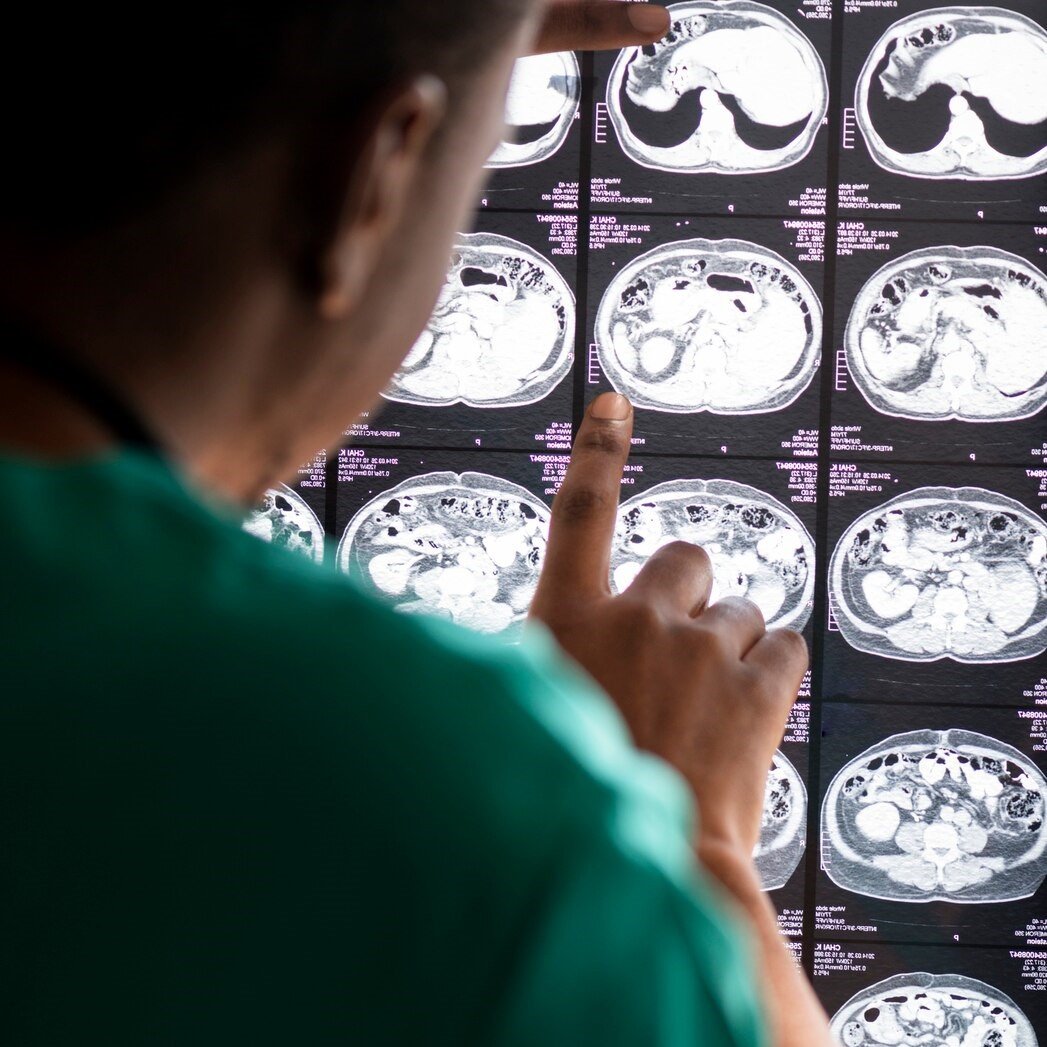

The exact cause of most brain tumors remains unclear. However, several factors may increase the risk of developing certain brain tumors.
Genetic Syndromes
Certain inherited conditions may increase tumor risk.
Previous Radiation Exposure
Prior radiation therapy to the head may increase long-term risk.
Family History
Rare familial predisposition may contribute in some cases.
Increasing Age
Certain brain tumors become more common with age.
Environmental Factors
Research continues regarding potential environmental influences.
Prior Cancer Diagnosis
Patients with systemic cancers may develop metastatic brain tumors.
Symptoms & Early Warning Signs
Symptoms vary depending on tumor location, size, growth rate, and involvement of surrounding brain structures.
Common Symptoms May Include:
-
Persistent or worsening headaches.
-
Seizures or new-onset epilepsy.
-
Nausea and vomiting, especially in the morning.
-
Vision disturbances or double vision.
-
Weakness or numbness affecting one side of the body.
-
Difficulty speaking or understanding language.
-
Memory problems and cognitive changes.
-
Balance difficulties and coordination issues.
-
Personality or behavioral changes.
-
Hearing loss or ringing in the ears.
-
Hormonal disturbances in pituitary tumors.
Because many neurological symptoms can have multiple causes, comprehensive medical evaluation is essential.
Advanced Diagnosis & Precision Tumor Evaluation in India
Accurate diagnosis is critical for determining the most appropriate treatment strategy.
Vanya Health facilitates access to advanced diagnostic evaluations including:
-
High-Resolution MRI Brain with Contrast
-
Functional MRI (fMRI)
-
Diffusion Tensor Imaging (DTI) Tractography
-
CT Brain Imaging
-
PET-CT Scanning
-
MR Spectroscopy
-
Neuronavigation-Based Surgical Planning
-
Stereotactic Brain Biopsy
-
Histopathological Examination
-
Molecular Profiling & Genetic Testing
Modern molecular testing can provide valuable information regarding tumor classification, prognosis, and treatment planning.

Why Vanya Health?
Choosing treatment abroad for a brain tumor can be overwhelming. Vanya Health helps simplify the process by connecting patients with highly experienced neurosurgical and neuro-oncology teams across India’s leading neuroscience centers.
What Makes Vanya Health Different?
-
Access to leading neurosurgeons and neuro-oncologists.
-
Personalized treatment planning based on tumor type and stage.
-
Assistance with medical record review and second-opinion coordination.
-
Support with hospital selection and treatment scheduling.
-
Dedicated patient coordinators throughout the treatment journey.
-
Continued communication support after treatment completion.
How Vanya Health Helps
Vanya Health acts as a trusted healthcare facilitator, helping patients connect with appropriate specialists and treatment centers.
Medical Evaluation
-
Collection and review of medical records.
-
Coordination of specialist consultations.
-
Assistance with obtaining second opinions.
Treatment Planning
-
Connecting patients with suitable neuroscience centers.
-
Explaining treatment options and estimated costs.
-
Facilitating treatment scheduling and hospital admissions.
Travel & Stay Assistance
-
Medical visa support documentation.
-
Airport pickup coordination & Accomodation assistance.
-
Language interpretation support when required.
Post-Treatment Support
-
Coordination of follow-up consultations.
-
Assistance with treatment documentation and medical summaries.
-
Continued communication support between patients and treating teams.
Our Process
Share Your Medical Reports
Send MRI scans, pathology reports, surgical records, and treatment history for review.
Specialist Evaluation
We coordinate consultations with appropriate neurosurgical and neuro-oncology specialists.
Personalized Treatment Recommendations
Patients receive treatment recommendations, estimated costs, and expected timelines based on their diagnosis.
Travel & Treatment Coordination
Our team assists with treatment scheduling, accommodation guidance, and medical visa documentation support.
Treatment in India
Patients receive treatment directly from their selected hospital and specialist team.
Follow-Up Care
We help facilitate communication and follow-up consultations after patients return home.
Frequently Asked Questions
Are all brain tumors cancerous?
No. Brain tumors may be benign (non-cancerous) or malignant (cancerous). However, even benign tumors may require treatment depending on their size and location.
Is surgery always required for brain tumors?
Not necessarily. Treatment depends on tumor type, location, size, growth pattern, symptoms, and overall patient health. Some tumors may be managed with radiation therapy, radiosurgery, observation, or systemic treatment.
Can brain tumors be treated with Gamma Knife or CyberKnife?
Certain brain tumors and metastatic lesions may be suitable for stereotactic radiosurgery. Eligibility depends on tumor characteristics and specialist evaluation.
How long does recovery take after brain tumor surgery?
Recovery varies significantly depending on tumor location, surgical complexity, neurological function, and overall health. The treating neurosurgical team can provide individualized expectations based on each case.
Can international patients obtain a second opinion before traveling to India?
Yes. Vanya Health can facilitate medical record review and specialist consultations, helping patients understand available treatment options before making travel arrangements.
Advanced Brain Tumor Treatment Options Offered in India
India’s leading neuroscience centers provide comprehensive neuro-oncology care using advanced surgical technologies, precision radiation techniques, and individualized treatment protocols.